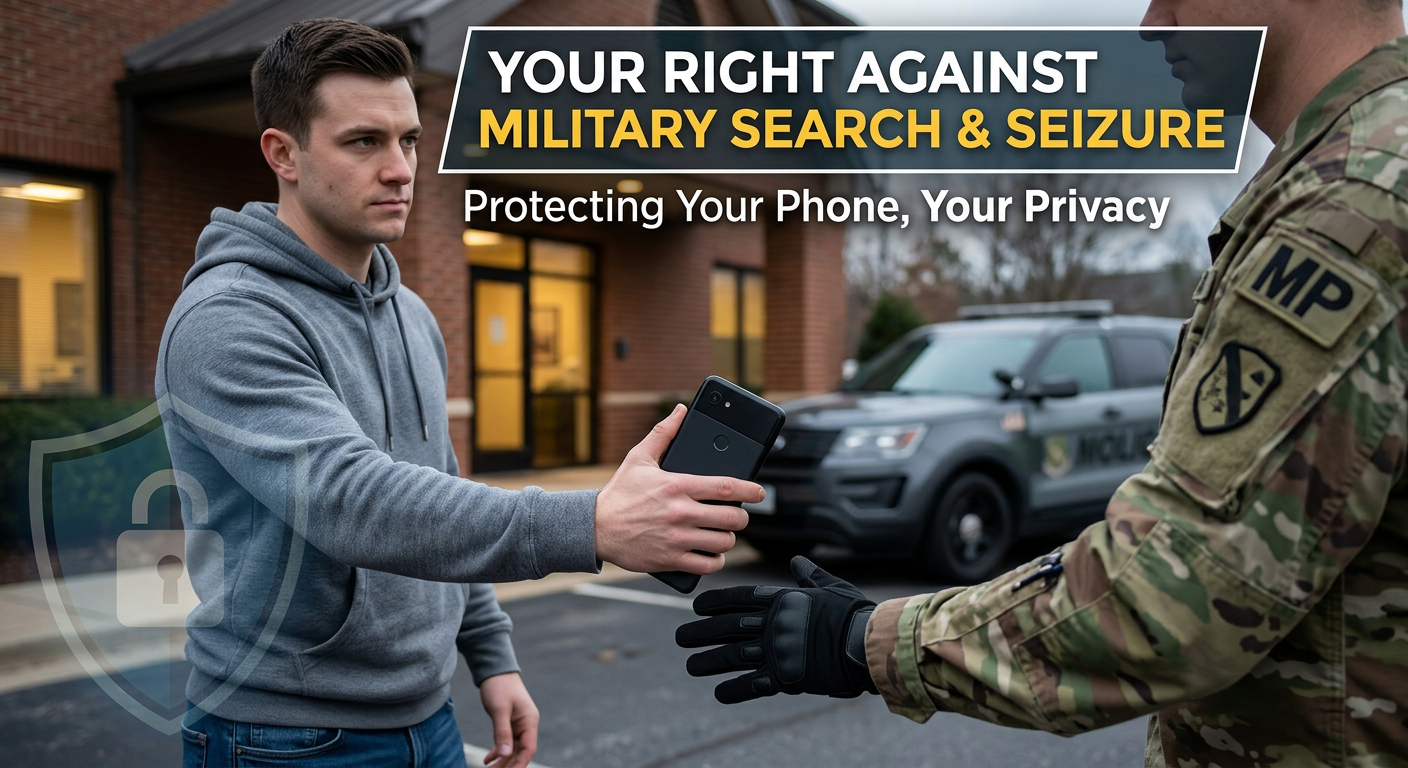
Can Military Law Enforcement Search My Phone? What Are My Rights?
Service members are asked to come in and speak to an investigator and they bring their phones. Oftentimes they have no idea why they are being asked to come in. And most of these times investigators want to see what they have on their phones. And when under pressure Soldiers, Sailors, Airmen, Marines, and Coast Guardsmen feel compelled to turn over their phones. This is never a good idea. It’s just best if a person is going to be speaking to an investigator they should just leave their phones at home or locked in their cars. This adds in an extra layer of safety and a retention of a person’s rights against search and seizure. In a recent podcast Attorney Peter Kageleiry, Jr. answered the following questions about seizure and search of a suspect’s phone.
Q: Can military law enforcement search my phone without a warrant?
A: No—unless you consent to the search. Never give your consent to a search of your property, including cell phones. Nowadays, everyone’s entire life is on their cell phones, and it’s very common for NCIS, CID, or OSI to want to get a look inside a suspect’s cell phone.
Q: What if the agents have a search authorization signed by a commander or a military magistrate can military law enforcement search my phone?
A: If the agents have a valid search authorization, then you may be compelled to turn over your cell phone. However, you cannot be compelled to unlock the phone for the agents. If you know you’re headed into an interrogation, turn off your cell phone and leave it at home or leave it in your car—don’t even bring it into the building with you.
Q: What should I do if agents show me a search authorization and order me to hand over my phone?
A: If they show you a search authorization and you receive a lawful order to turn it over, you might have to tell them where the phone is and allow them to seize it. But there’s no reason at that point for you to even touch the phone. Do not unlock it, do not provide the passcode, and do not assist them in accessing the contents.
Q: Can agents use my face or fingerprint to unlock my phone?
A: They may try. In at least one case, agents placed a client into handcuffs and held the phone up to their face to unlock it using facial recognition. That’s why it’s a good idea, if you know you’re headed to an interrogation, to turn off the biometrics on your phone—disable facial recognition, fingerprint unlock, and any other biometric features. Service members cannot be compelled to unlock the phone or provide the passcode.