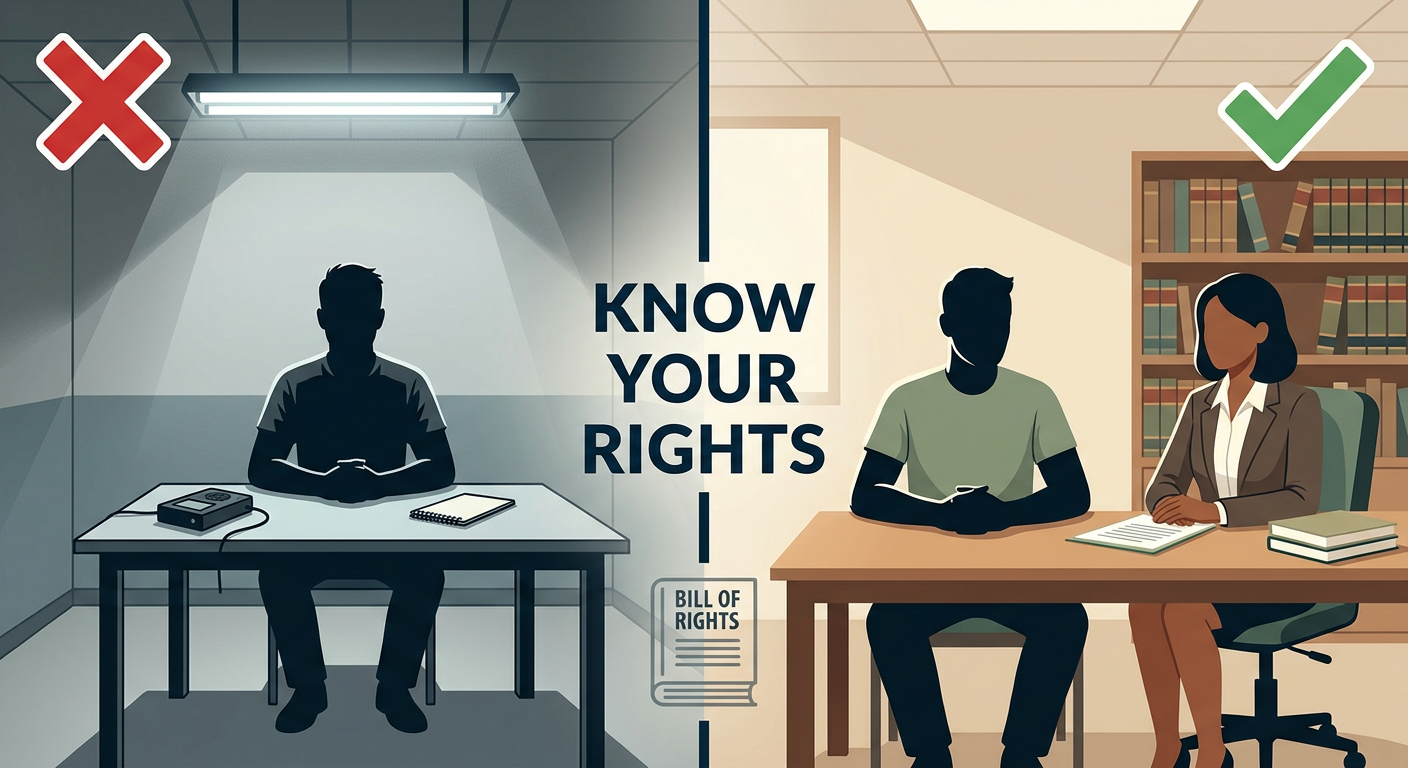
What Should I Do If Military Law Enforcement Wants to Question Me?
Q: I’ve been told that military investigators want to talk to me about an incident. Should I agree to be interviewed?
A: No. If you are suspected of an offense under the Uniform Code of Military Justice, you have the right to refuse to speak with military law enforcement. You should absolutely invoke your rights to speak with an attorney and to remain silent. Do not, under any circumstances, answer questions—especially without talking with an experienced attorney beforehand.
Q: Why shouldn’t I just cooperate and tell my side of the story? Won’t that help clear things up?
A: Unfortunately, no. Military law enforcement interrogators are trained to obtain confessions, not to exonerate suspects. From their perspective, the whole point of the interrogation is to obtain a confession so that they can close the case and move on to the next one. Most service members believe that if they cooperate with CID agents, the agents will believe them. But in many cases, the agents reach a conclusion and then investigate—they’ve already determined that the suspect is guilty before the interrogation even begins.
Q: Can the agents lie to me during an interrogation?
A: Yes. Military law enforcement agents are allowed to invent evidence, make up facts, and confront you with fake evidence. Whether they are CID, CGIS, OSI, or NCIS, they can tell you they have witnesses or physical proof that doesn’t actually exist. Any statement you make will be used against you, regardless of your guilt or innocence.
Q: What if the agents keep pressuring me? How long can they keep me in an interrogation room?
A: Agents can keep you in an interrogation room for extended periods—sometimes nine hours or more over the course of multiple days. They will accuse you of lying and confront you with false evidence to pressure you into signing a statement that they type out for you. That’s exactly why you should invoke your rights immediately and refuse to participate in the process.
Q: If I ask for a lawyer, won’t that make me look guilty?
A: No. Invoking your constitutional right to remain silent and to speak with an attorney is exactly that—a constitutional right. Everyone in the military, including CID agents and other military law enforcement, swears an oath to protect and defend the U.S. Constitution, which guarantees you the right to remain silent if you’re suspected of an offense. The agents will try to imply that refusing to answer questions will make you look guilty and that things will go worse for you, but that’s part of their interrogation strategy. Don’t fall for it.
Source
Q: What are the “magic words” I should use to stop questioning?
A: Tell the agent: “I invoke my right to remain silent.” Once you say that, all questioning must stop. You can also say: “I want to speak with my attorney before answering any questions.” If you invoke your right to speak with an attorney, the service member has the right to go find an attorney, speak with that attorney, and then can come back and answer questions if they choose to—but Attorney Peter Kageleiry, Jr. advises that 99.9 times out of 100, clients should not make a statement to military law enforcement.
Q: What if I’ve already made some statements? Is it too late?
A: Invoke your rights immediately and stop talking. Even if you’ve already answered some questions, you can and should invoke your right to remain silent at any point. The damage may already be done, but further statements will only make things worse. Contact an experienced military defense attorney as soon as possible.